AI‑Driven Home Automation OS for Modern Living
UX/UI IoT AI-Aligned UX Branding Front-end
IMPORTANT: This is a fictional concept project created solely for design exploration. It is not affiliated with, endorsed by, or associated with any real company, brand or organisation — including any that may have similar names. All branding, visuals and content were created for portfolio purposes only.
Overview
Project
An AI‑driven home automation OS that unifies health, wellness, and daily living into one intelligent dashboard. It centralises personal and family data, automates routines, and delivers real‑time insights for a smoother, more connected home experience.
Duration
Built over multiple iterative phases, covering concept design, UI/UX development, component architecture, and refinement. Evolved steadily with a focus on scalability, multilingual support, and a polished user experience.
Problems
Modern households rely on scattered apps for health, routines, and personal data. Nothing brings everything together in one place, especially for families. This fragmentation creates confusion, inefficiency, and poor visibility into daily wellbeing
Goals
Create a unified, intelligent platform that simplifies home and health management. Deliver a clean, modern interface that supports families, automates routines, and lays the foundation for future AI‑powered features.
My role
Led the front‑end architecture, UI/UX direction, and component development. Translated product concepts into functional, responsive interfaces aligned with the vision of a modern home OS.
My responsibilities
Designed and implemented modular React components, structured data flows, and a cohesive design system. Built multilingual support, device‑aware filtering, and family‑profile logic while ensuring performance, accessibility, and clean code.
The Challenge
Modern life has become overwhelmingly complex. People juggle health, family, work, schedules, devices, and endless digital platforms that don’t talk to each other. Nothing existed that could unify all of this into one coherent experience. The result was fragmentation, stress, and a constant feeling of being behind.
The Reality
As cities become smarter and technology becomes woven into daily life, people expect more control, more clarity, and more comfort. They want a lifestyle that feels elevated but not chaotic. They want tools that help them plan, automate, and manage their world without friction. This is what luxury feels like today!
The Vision
People deserve a life that feels connected, effortless, and intelligently supported. As technology becomes embedded in every part of modern living, the home needs a central system that brings clarity instead of complexity. This platform acts as the operating layer for daily life, unifying family, health, routines, and personal data into one intelligent experience. It’s built for the future of smart living, where everything works together instead of apart.
The Solution
This system fills the gap that no other product addressed, a single place where people can manage and understand their entire life. It replaces scattered apps and disconnected tools with one unified, AI‑driven platform that organizes, automates, and simplifies daily living. Families gain visibility, individuals gain control, and the home finally has a brain that ties everything together.
Design Decisions

AI enhanced Artwork
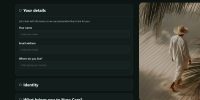
I used AI‑enhanced artwork to give the system a modern, premium visual identity that matches the future it represents. The imagery reinforces the idea of intelligent living and creates an immersive experience without relying on stock visuals. It helps the interface feel alive, adaptive, and aligned with the product’s forward‑thinking vision.
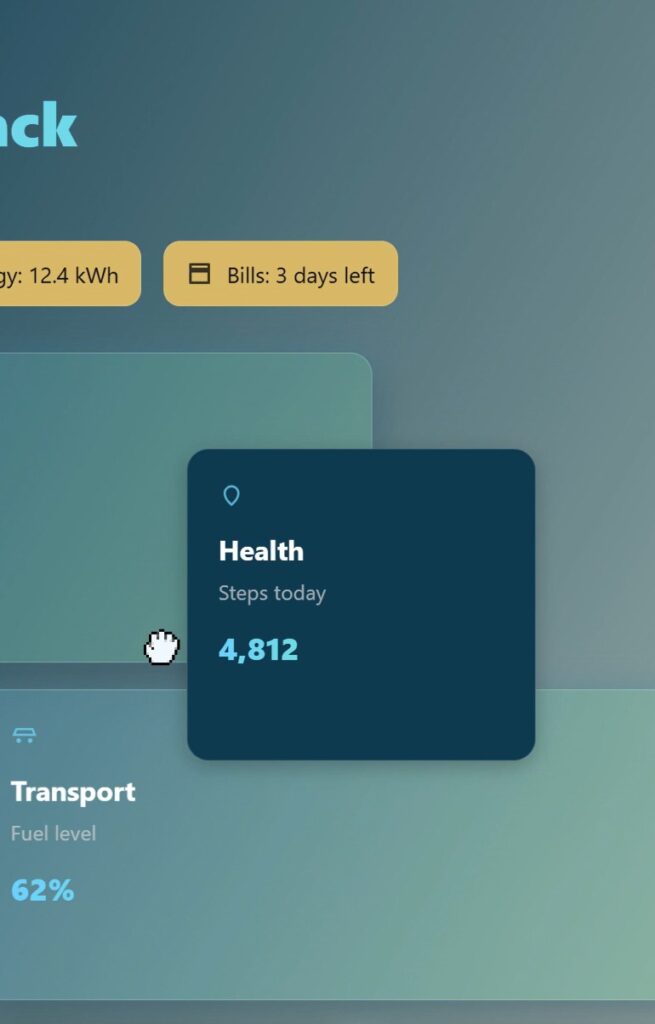
Expected Controls
Drag‑and‑drop was added to make the system feel more natural and intuitive. People want control without complexity, and this interaction lets them organize their life the same way they would move objects in the real world. It reduces friction, speeds up navigation, and gives users a sense of ownership over their environment.
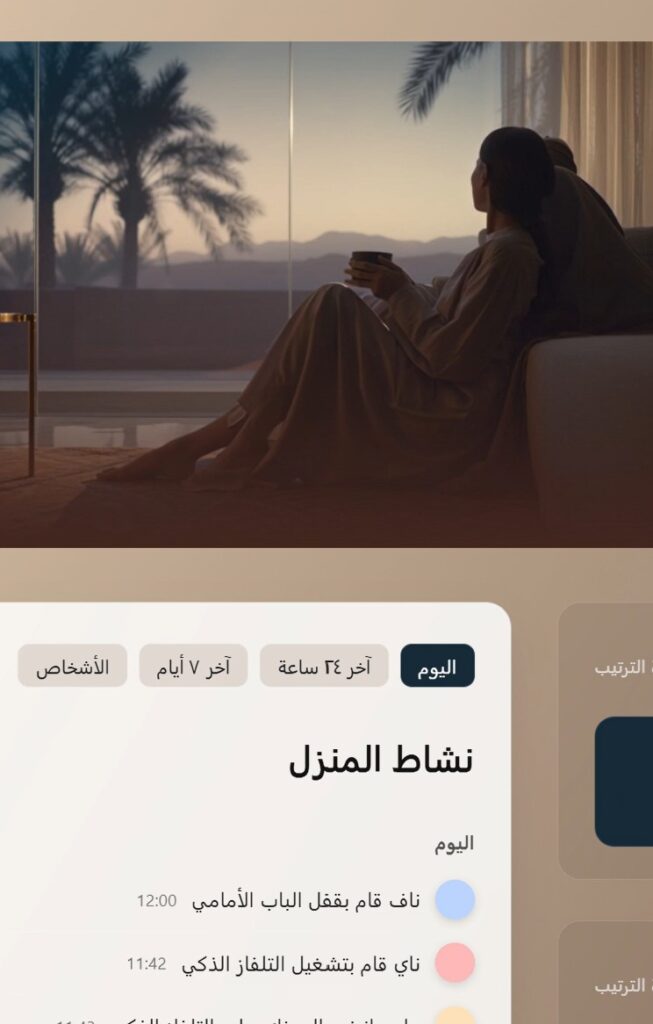
Local Languages
Local language support was essential because modern living isn’t one‑size‑fits‑all. Families speak differently, think differently, and interact with technology differently. By supporting multiple languages, the system becomes personal, inclusive, and accessible, a true home OS that adapts to the user, not the other way around.
Thank you!
Jump to another case study
Click on another case study to view it.


© creattaf.co.uk 2026. All rights reserved.
All trademarks, logos and brand assets are the property of their respective owners and are displayed for portfolio presentation purposes only. Contact me for more information.